
The Comedians Fought Back. Punk Rock Stayed Silent. Do Green Day Even Know What They Did?
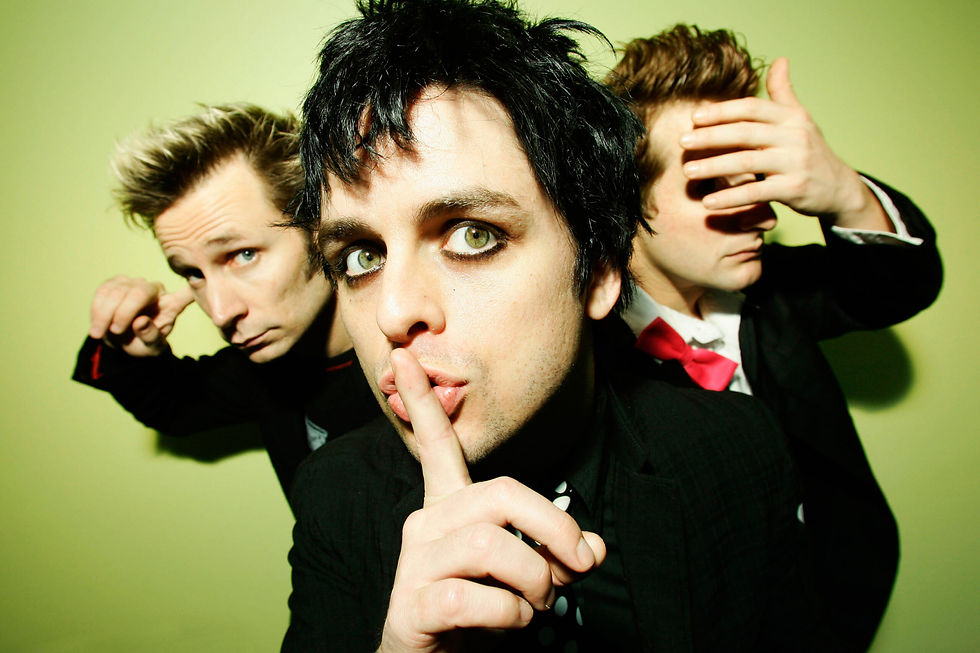
On the same day, SiriusXM replaced two national radio stations that supported independent artists with celebrity-branded channels. Six months later, one community has organized and demanded answers, while the other has barely made a sound. Perhaps it's time punk rock took a lesson from the stand up community.
On April 20, 2026, SiriusXM made two decisions that should have raised serious questions within two very different entertainment communities. On that day, Raw Comedy, a station that provided exposure and meaningful royalty income to more than 800 working comedians, was replaced by Sebastian Maniscalco's Comedy Radio. On the very same day, Faction Punk, one of the few remaining national radio platforms dedicated to punk rock, was replaced by Green Day's Idiot Nation.
Same company, same day, and two established stations replaced by channels built around enormously successful celebrities. Yet six months later, the reactions from the communities involved couldn't be more different. The comedians organized, spoke out, shared information, and generated enough pressure that one of the biggest names in comedy publicly acknowledged their concerns and promised to help make changes. Meanwhile, in punk rock, there has been remarkably little public discussion about what the loss of Faction Punk might mean for independent bands.
There's something rather ironic about that. An art form built on challenging authority, questioning corporate influence, and supporting the underdog appears to have been considerably quieter than a group of stand-up comedians fighting to protect their livelihoods. And perhaps the most interesting question isn't simply what SiriusXM did, but whether Green Day even realizes what the change might have meant for the independent artists who previously relied on that platform.
The comedians weren't laughing
For years, SiriusXM's Raw Comedy provided something increasingly rare in an entertainment industry obsessed with celebrity, a national platform where independent performers could receive meaningful exposure and actually earn money from their work. We're not talking exclusively about household names or comedians with multimillion-dollar Netflix specials, but working performers traveling between clubs, building audiences one show at a time, and trying to turn their passion into a sustainable career.
According to the nonprofit Stand Up for Stand Up, Raw Comedy played more than 800 different comedians, with satellite radio spins reportedly generating approximately $15 in royalties each. That might not sound particularly impressive to someone selling out arenas, but regular airplay could provide a meaningful contribution toward rent, groceries, travel expenses, and all the other costs associated with pursuing an independent career.
When SiriusXM replaced Raw Comedy with Sebastian Maniscalco's Comedy Radio, the consequences were dramatic. Figures published by Stand Up for Stand Up showed that the number of comedians receiving airplay dropped from 812 in April to just 275 by September, a reduction of 537 performers. Meanwhile, more than 75% of the station's spins were reportedly concentrated among its 50 most-played comedians. The airtime hadn't simply disappeared, it was being distributed among a considerably smaller group of artists, leaving hundreds of working performers without a source of exposure and potential income they had previously enjoyed.
Understandably, the comedy community wasn't particularly happy about this. But rather than accepting the situation as another unfortunate consequence of corporate entertainment, independent comedians began organizing, sharing the statistics, and encouraging their audiences to pay attention. Established performers joined the conversation, recognizing that the issue extended beyond any one comedian's personal income and raised questions about the health of the wider comedy industry.
Their efforts eventually generated enough attention that, on October 7, Sebastian Maniscalco publicly responded. He explained that SiriusXM had decided to eliminate Raw Comedy before his involvement, acknowledged the concerns being raised, and promised to work with the company to provide opportunities for a broader range of comedians. He asked the community to give him some time to make changes.
Of course, a public statement doesn't automatically restore lost royalties or guarantee that hundreds of comedians will return to rotation. The effectiveness of those promises will ultimately be measured by what SiriusXM actually does next. Nevertheless, the response represents something important: a grassroots movement of independent artists managed to bring a major entertainment company and one of comedy's biggest stars into a public conversation about the people being left behind.
It's an impressive demonstration of solidarity, and one that punk rock could probably learn something from.
Meanwhile, on the exact same day, punk rock lost Faction Punk
What makes the comedy controversy particularly relevant to our world is that SiriusXM replaced Faction Punk with Green Day's Idiot Nation on exactly the same date, April 20, 2026. Two genre-based stations, both offering national exposure to artists at different levels of their respective industries, were replaced by channels carrying the identities of two enormously successful entertainers.
For independent punk bands, Faction Punk represented something increasingly difficult to find. It was a national platform where relatively unknown artists could hear their music played alongside the bands that inspired them, without necessarily having major-label support, millions of streams, or the promotional resources available to established acts. For a band playing small clubs, traveling across the country in a van, and investing its own money into recording and touring, that kind of exposure could make a genuine difference.
National radio airplay offers more than the satisfaction of hearing your own song coming through the speakers. It introduces artists to listeners who might otherwise never discover them, helps build credibility with promoters and audiences, and can translate into ticket sales, merchandise purchases, and new supporters. Satellite radio also generates royalties for musicians and rights holders, although the payment structure is different from that affecting stand-up comedians. For independent artists operating on narrow margins, every additional opportunity matters.
When Faction Punk became Green Day's Idiot Nation, the station didn't suddenly stop playing punk rock. The new channel continues to feature music from across the genre, including newer and independent bands, and having one of the biggest punk bands in the world introduce listeners to lesser-known artists could undoubtedly be a positive thing.
But there's an important distinction between a station dedicated to representing a music scene and one built around the identity and musical perspective of a single successful band. That doesn't automatically make the latter worse, but it does raise questions about programming priorities, the diversity of artists receiving airplay, and whether independent bands continue to enjoy the same opportunities they had before.
Those questions deserve answers, particularly when we've just watched another independent entertainment community demonstrate what can happen when artists collectively demand them.
Does Green Day even know what happened?
Before this becomes misunderstood as an attack on Green Day, it's worth emphasizing that the band has played an enormous role in bringing punk rock to mainstream audiences. Billie Joe Armstrong, Mike Dirnt, and Tré Cool came from an independent scene built around small clubs, grassroots promoters, independent labels, and the kind of community support that allows unknown bands to develop into something bigger. Their success has introduced countless people to punk rock, and their continued involvement in promoting the genre should be welcomed.
But that's precisely why the situation raises an interesting question. Do Green Day actually know whether independent punk bands lost airplay when Faction Punk became Idiot Nation? Are the same artists still receiving regular rotation, or has the programming become more concentrated around established acts? Has the number of independent bands receiving spins increased or decreased, and what effect, if any, has that had on the royalties those artists receive?
Unlike the comedy controversy, where Stand Up for Stand Up has published detailed figures documenting the reduction in performers receiving airplay, we don't currently have comparable public data showing exactly how independent punk bands were affected by the transition. It would be unfair to claim that hundreds of bands have been removed from rotation without evidence, just as it would be premature to assume that the new channel has negatively affected independent artists simply because it carries Green Day's name.
But surely that uncertainty should make us more interested in finding out.
There's no reason to believe Green Day personally decided which bands would receive more or less airplay, and it's entirely possible that the band has little involvement in the day-to-day programming decisions made by SiriusXM. However, when an established platform becomes associated with your name, it seems reasonable for the community to ask whether the people who previously benefited from it are still being supported.
Sebastian Maniscalco was faced with a similar question, and following considerable pressure from the comedy community, he responded. Would Green Day be willing to do the same? More importantly, if independent bands have lost opportunities, would they be interested in working with SiriusXM to address the issue?
I would like to think the answer would be yes.
When did punk rock become so quiet?
Perhaps the most disappointing aspect of this story isn't the decision SiriusXM made, but the apparent lack of conversation surrounding it within the punk community. For decades, punk rock has celebrated independence, solidarity, and the importance of challenging the institutions that control access to music. We've built scenes around those principles, written songs about them, and repeatedly emphasized the importance of supporting independent artists rather than allowing the industry to dictate who deserves to be heard.
Yet when one of the few remaining national radio platforms dedicated to punk rock was replaced, there seemed to be surprisingly little public discussion about what that change might mean for the independent bands who depended on it. Where were the independent labels, established artists, promoters, and publications asking questions? Did everyone simply assume that Green Day would look after the smaller bands, or have we become so accustomed to watching opportunities disappear that we barely notice anymore?
Independent musicians are already facing an increasingly difficult environment. Streaming royalties offer limited income for most developing artists, social media algorithms have become powerful gatekeepers, touring expenses continue to climb, and small venues are struggling with rising operating costs. Bands are expected to absorb these pressures while continuing to record, tour, promote themselves, and somehow maintain the enthusiasm required to keep going.
That's why independent platforms matter, and why changes to those platforms deserve scrutiny. Nobody is suggesting that SiriusXM has an obligation to maintain the same programming forever, but when a station that has supported independent artists for years is fundamentally changed, asking about the consequences shouldn't be considered unreasonable.
The most encouraging part of the comedy controversy isn't simply that Sebastian Maniscalco issued a statement. It's that hundreds of independent performers recognized a shared problem and collectively decided to do something about it. Rather than treating the loss of airplay as an individual disappointment, they understood that the concentration of opportunities among a smaller group of performers threatened the wider community.
Established comedians used their influence to amplify the concerns of lesser-known artists, independent performers shared their experiences, and a grassroots movement generated enough attention to force a public response. Whether that pressure ultimately produces meaningful programming changes remains to be seen, but the community has already demonstrated the value of speaking together rather than accepting corporate decisions without question. Punk rock could benefit from remembering that lesson.
This isn't about resenting successful artists or demanding that established bands apologize for their achievements. It's about recognizing that the health of an independent music community depends on opportunities being available beyond the handful of artists who have already made it.
The comedians understood that, organized around it, and made enough noise to get an answer. Punk rock, a genre that has spent decades celebrating exactly that kind of collective action, has an opportunity to ask some important questions of its own.
So here's the question for Green Day: Do you know what happened to the little guys when Faction Punk became Idiot Nation?


Comments